The Great Pyramid of Giza: Your Complete Guide to Visiting the Last Wonder of the Ancient World
Africa Travel Bookings
· 5 min read
Published: 2 May 2026 | Category: Culture & Heritage | Tags: Egypt, North Africa, Ancient History, Giza, Pyramids, UNESCO
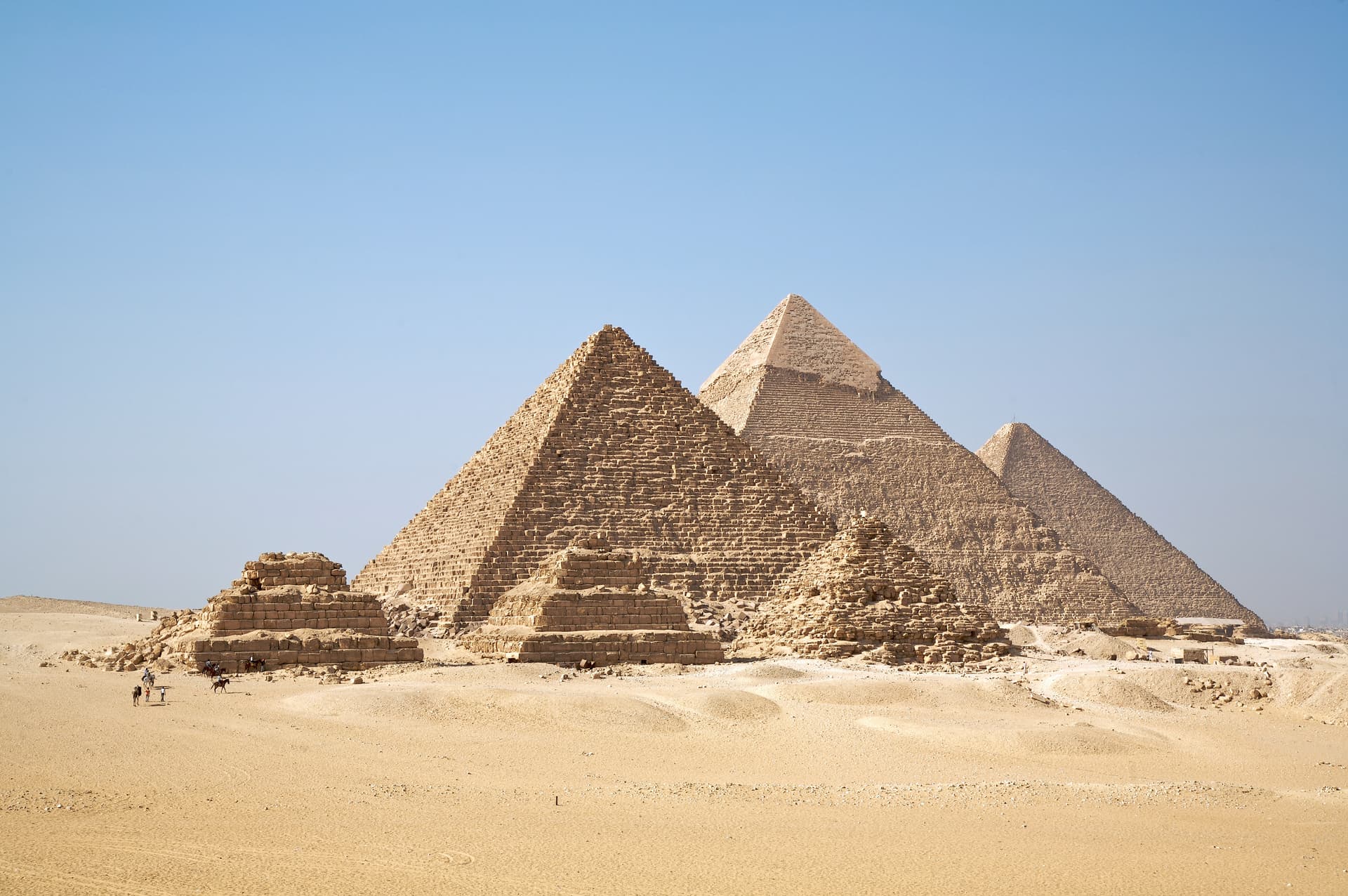
The first thing that strikes you is not the size — it is the silence. You are standing at the edge of the Giza Plateau, and the Great Pyramid of Khufu fills your entire field of vision: 138.5 metres of pale limestone rising against an electric-blue Egyptian sky, each stone course as deliberate as the day it was placed 4,500 years ago. Nothing in your prior experience — no photograph, no documentary, no childhood drawing — has prepared you for this. The Great Pyramid of Giza is the oldest and last surviving Wonder of the Ancient World, and standing at its base, you understand why it has held that title for two millennia.
Egypt has never been more accessible to international visitors. New direct routes, upgraded airport facilities, and a government-backed push to revitalise tourism have made the country's flagship monument easier to reach than at any point in modern history. This guide covers everything you need to plan your visit — from the best time to arrive at the Giza Plateau to what it costs to enter the King's Chamber.
Why Visit the Great Pyramid of Giza
The Great Pyramid is the only one of the Seven Wonders of the Ancient World still standing — that fact alone places it in a category no other destination on Earth can claim. Compared to other Egyptian highlights such as Luxor's Valley of the Kings, Giza offers a combination of raw scale, historical depth, and architectural precision that no other ancient site matches.
Constructed between approximately 2589 and 2566 BCE for the Pharaoh Khufu, the pyramid originally rose to 146.5 metres, making it the tallest man-made structure on Earth for nearly 4,000 years — a record it held until Lincoln Cathedral was completed in England in 1311 CE. Its base covers 5.3 hectares and is composed of approximately 2.3 million stone blocks, each weighing between 2.5 and 75 tonnes. The precision of its construction remains a subject of genuine academic debate: its four corners align to the cardinal directions with an accuracy of less than 0.05 degrees.
The Giza Plateau also holds the pyramid of Khafre, the smaller pyramid of Menkaure, the Great Sphinx, mortuary temples, and ancient worker cemeteries — making it one of the most richly layered archaeological landscapes on the continent.
Top Attractions & Experiences at Giza
The Great Pyramid of Khufu (Cheops)
The primary structure on the plateau, Khufu's pyramid remains the largest of all Egyptian pyramids and the singular reason most visitors make the journey to Giza. You can enter the interior — though the passages are low, narrow, and warm, this is not a journey for the claustrophobic. The ascending passage climbs steeply through the rock to the Grand Gallery: a corbelled hall six metres high that opens, finally, into the King's Chamber. Inside the King's Chamber, everything changes. The air is still, the pink Aswan granite blocks fit with extraordinary precision, and the empty sarcophagus of Khufu sits at the far end, silent and permanent. Entry to the plateau is included in the main site ticket; interior pyramid access requires a separate ticket, capped at 300 visitors per day.
The Pyramid of Khafre
The second pyramid on the plateau appears taller than Khufu's from most angles, due to its higher ground elevation and steeper slope. Khafre's pyramid retains a cap of its original white Tura limestone at the apex — the only pyramid on the plateau to do so. That pale cap gives a vivid impression of how all three monuments would have looked when newly completed: gleaming white, smooth-sided, and almost impossibly bright under the Egyptian sun. Interior access is available here too, with a different passage layout and atmospheric burial chamber.
The Great Sphinx
Carved from a single mass of natural limestone bedrock, the Great Sphinx stands 20 metres tall and stretches 73 metres in length. It faces due east — directly into the rising sun — and is believed to represent Pharaoh Khafre in the form of a lion, a royal guardian of the plateau. Approaching it from the front, at the Valley Temple, reveals the full drama of the figure. The Sphinx enclosure is included in general site admission. Licensed guides provide the contextual depth that transforms this from a famous face into a deeply considered piece of royal propaganda and religious architecture.
The Solar Boat Museum
Located on the south side of the Great Pyramid, the Khufu Ship Museum houses an extraordinary and largely overlooked treasure: the reconstructed Solar Boat of Khufu, a 43.6-metre cedar vessel buried beside the pyramid around 2500 BCE. The boat was discovered in 1954 in a sealed pit and painstakingly reassembled over years. It is among the oldest preserved vessels ever found, and the purpose-built museum controlling humidity and light around it is one of the most thoughtfully designed spaces on the plateau. A separate admission fee of approximately $10 USD applies.
The Workers' Village and Mortuary Temples
Most visitors see only the three pyramids in sequence. A better approach is to spend half a day with a licensed guide understanding the plateau as a unified complex: the mortuary temples, the causeway connecting Khafre's pyramid to the Valley Temple below, and the workers' village recently excavated to the south. This archaeological settlement, discovered in 1990, definitively disproved the idea that the pyramids were built by slaves. What emerged instead was evidence of an organised workforce of Egyptian citizens — fed by industrial bakeries and breweries, housed in purpose-built barracks, and buried with honour when they died in service to the pharaoh.
The Evening Sound and Light Show
Each evening, the plateau becomes the setting for a theatrical production using the pyramid faces as projection screens and the Sphinx as narrator. The show runs in multiple languages on different evenings, and the combination of floodlit stone, narrated history, and desert air makes for a powerful experience. Arriving for the evening show allows you to see the plateau in two entirely different registers: the harsh clarity of the afternoon sun and the more dramatic, shadow-heavy illumination of the night.
Best Time to Visit
Egypt has two dominant seasons that govern the visitor experience at Giza.
October to April is universally the recommended window. Daytime temperatures on the plateau sit between 15°C and 25°C, making extended outdoor exploration genuinely comfortable. This period also coincides with peak European and North American travel, so expect larger crowds — particularly December through March.
May to September brings intense heat, with daytime temperatures regularly reaching 38°C to 42°C. Visitors who can manage the conditions — early morning starts, light clothing, constant hydration — gain the advantage of significantly smaller crowds and lower accommodation prices throughout Cairo and Giza.
The absolute best months to visit, balancing comfortable weather with manageable crowds and strong value, are October and March.
Best overall:       October–November / February–March
Budget travel:      May–August (heat is the trade-off)
Avoid:              July–August peak — extreme heat; viable only with pre-dawn starts
Ramadan:            Variable (lunar calendar) — some services reduced; culturally vivid
The Giza Plateau opens at 8:00 AM. Arriving at opening time, particularly from October to March, gives you approximately 90 minutes before the tour buses arrive from central Cairo. That window — early light, relative quiet, and the full scale of the pyramid without crowd noise — is the defining Giza experience.
Getting There
The main international gateway is Cairo International Airport (CAI), which receives direct flights from most major European cities, the Middle East, and several North American hubs. Key airlines serving Cairo include EgyptAir, Emirates, Qatar Airways, Turkish Airlines, Lufthansa, British Airways, and Air France.
Flight duration from London Heathrow to Cairo is approximately four to five hours. From Dubai International, just under three hours. From Nairobi, EgyptAir and other carriers operate direct routes in around three hours, making Egypt a natural addition to an East Africa itinerary.
The Giza Plateau sits on the western edge of Giza city, roughly 15 kilometres from central Cairo. From the airport, the journey takes between 30 and 60 minutes depending on traffic. Licensed taxis, ride-hailing apps (Uber operates extensively in Cairo), and organised tour transfers are all reliable options. Avoid unmarked or unlicensed vehicles.
For visitors combining Giza with other Egyptian highlights — Luxor, Aswan, Abu Simbel — EgyptAir operates domestic routes, and overnight sleeper trains connect Cairo to Luxor and Aswan for those who prefer rail.
Visa & Entry Requirements
Most international visitors require a visa to enter Egypt. The most convenient option for travellers from over 70 countries is the Egypt e-Visa, available online at the official government portal (visa2egypt.gov.eg). The single-entry tourist e-Visa currently costs $25 USD and is typically processed within three to five business days.
Citizens of a number of countries — including some European and Gulf states — qualify for a visa on arrival at Cairo International Airport, valid for 30 days at approximately the same cost.
Your passport must be valid for at least six months beyond your intended departure date from Egypt.
A Yellow Fever vaccination certificate is required for travellers arriving from countries where Yellow Fever is endemic — including much of sub-Saharan Africa. Travellers from non-endemic countries are not typically required to present one, but carrying a vaccination record is advisable practice.
Always verify current requirements with the Egyptian Embassy or official consulate in your home country before travel, as entry rules can change without notice.
Getting Around
The Giza Plateau is navigated primarily on foot. The distances between the three main pyramids, the Sphinx, and the Solar Boat Museum are manageable but significant — plan for three to five kilometres of walking across uneven, rocky ground if you intend to see everything thoroughly. Sturdy, closed-toe walking shoes are non-negotiable.
For visitors who prefer not to walk the full distance, camel and horse rides are available from licensed operators near the plateau entrance. Negotiate the price before boarding and confirm the return journey is included — this is a well-documented area for tourist overcharging. Only use operators who display a Ministry of Tourism licence.
Within Cairo, Uber and Careem ride-hailing services are reliable and well-priced. Licensed taxis are widely available but always agree on the fare before entering the vehicle.
For day trips combining the Giza Plateau with Saqqara (the Step Pyramid of Djoser), the ruins of Memphis, and Dahshur (the Bent Pyramid and Red Pyramid), hiring a driver for the day is the most efficient approach. A full day covering all four sites costs approximately $50 to $80 USD for the vehicle, excluding entry fees. Self-driving in Cairo is not recommended — traffic is intense, parking near the plateau is chaotic, and English road signage is inconsistent.
Accommodation Guide
Accommodation ranges from budget guesthouses in Giza City to some of the most iconic luxury hotels in Africa — several of which offer direct pyramid views from the room.
Budget (under $80 per night): Hostels and small guesthouses are concentrated in the Zamalek neighbourhood of Cairo (an island in the Nile, central and walkable) and the Dokki or Mohandiseen districts of Giza. Budget accommodation immediately adjacent to the plateau is limited and variable in quality — for most budget travellers, staying in central Cairo and making the plateau a day trip is the better approach.
Mid-range ($80–$250 per night): A solid range of international hotel brands — Novotel, Mövenpick, Hilton — operate in Giza and along the Nile Corniche, several offering partial pyramid views at mid-range price points. Staying on the Cairo side of the Nile also gives walkable access to the Egyptian Museum and the Khan el-Khalili bazaar.
Luxury ($250–$1,000+ per night): The Marriott Mena House in Giza is the iconic choice at this tier — a historic property that has hosted royalty and heads of state since the 19th century, with direct, unobstructed views of the Great Pyramid from its garden and pool terrace. The Four Seasons Cairo at Nile Plaza offers exceptional quality with Nile-facing rooms and immaculate service. Both properties represent strong value by international luxury standards.
Food & Culture
Egyptian cuisine is built on depth and simplicity. The essential street food dishes — ful medames (slow-cooked fava beans), koshari (layered rice, lentils, pasta, and spiced tomato sauce), and ta'ameyya (Egyptian falafel made with broad beans rather than chickpeas) — cost well under $3 USD at local cafés throughout Cairo and Giza, and they are genuinely delicious. These should be your first food experiences in Egypt.
Kofta on charcoal skewers and hawawshi (spiced minced meat baked inside bread) are the go-to evening meals at neighbourhood restaurants. For something more formal, the restaurants in the Mena House garden serve Egyptian mezze alongside views of the pyramid floodlit after dark — an experience with few equivalents anywhere on the continent.
Egypt is a predominantly Muslim country. Visitors should dress modestly when exploring areas beyond the hotel pool and the open-air plateau, particularly inside Cairo's mosques and markets. Inside the pyramid's internal passages, temperatures are warmer and spaces tight — dress in light layers and avoid bulky clothing. Photography is permitted throughout the plateau; a supplementary fee applies for camera use inside the pyramids and some museums.
Cairo carries a culture of hospitality that can occasionally feel persistent — tea is offered at every shop, unofficial guides propose their services at every corner. A polite, firm refusal is perfectly acceptable and universally understood. Learning a few words of Arabic is always appreciated and will be met with genuine warmth.
Budget & Cost Guide
The Giza Plateau site ticket costs approximately $7 USD for general admission. Individual tickets for the interior of the Great Pyramid (approximately $15 USD), the Solar Boat Museum ($10 USD), and other structures are additional charges. Hiring a licensed English-speaking guide at the site costs between $30 and $60 USD for a half-day.
Egypt remains one of Africa's most affordable destinations for mid-range and budget travellers, particularly given the favourable exchange rate between major international currencies and the Egyptian Pound.
Budget traveller:     ~$50–$80 per day (hostel, street food, local transport)
Mid-range traveller:  ~$100–$200 per day (hotel, restaurant meals, private transfers)
Luxury traveller:     $300–$700+ per day (five-star hotel, private guide, fine dining)
The local currency is the Egyptian Pound (EGP). US Dollars and Euros are widely accepted at tourist sites, hotels, and many restaurants, though paying in local currency at current exchange rates typically offers better value. ATMs are widely available in Cairo and Giza. The biggest cost variable for budget travellers is accommodation — choosing a Zamalek hostel over a Giza hotel can save $60 to $100 per night.
Travel Tips & Safety
Health: Malaria is not present in Cairo or along the Nile Valley. Travellers arriving from or continuing to sub-Saharan African countries should carry appropriate prophylaxis for those regions. Travellers' diarrhoea is a common concern — drink bottled or purified water, avoid ice in drinks, and exercise reasonable caution with street food for the first two days. Hepatitis A and Typhoid vaccinations are recommended for most travellers.
Travel insurance: Comprehensive travel insurance covering medical evacuation is essential for any international trip. Ensure your policy is active before you depart, and carry the emergency contact number separately from your phone.
Safety: Cairo and the Giza area are generally safe for tourists. The most common risks are petty theft in crowded bazaars, overcharging by unlicensed guides, and persistent but rarely threatening vendor pressure at tourist sites. Keep your passport and large amounts of cash at the hotel; carry a photocopy. Use only licensed official guides — they carry a Ministry of Tourism identification badge — and agree all prices before services begin.
Packing essentials: A wide-brim hat, SPF 50+ sunscreen, and more water than you think you need — the plateau offers almost no shade. A scarf or light cover-up is useful for women when entering mosques or markets. Sturdy, closed-toe walking shoes are essential; the ground around the pyramids is rocky and irregular.