Ngorongoro Crater (Tanzania)
Africa Travel Bookings
· 5 min read
The air shimmers with the first light of dawn as you stand on the rim of Ngorongoro Crater, the vast caldera unfolding below like a prehistoric amphitheatre carved by ancient gods. Dust devils dance across the floor, where elephants graze peacefully beside flamingos wading in alkaline lakes, and lions lounge in the shade of acacia trees. This UNESCO World Heritage Site, a collapsed volcano that has become Africa's most accessible wildlife sanctuary, offers an unparalleled glimpse into the continent's wild heart. With over 25,000 large mammals roaming its fertile plains, Ngorongoro Crater stands as Tanzania's crown jewel of safari experiences, drawing adventurers from around the world to witness nature's grand spectacle. This comprehensive guide explores everything you need to know about visiting Ngorongoro Crater, from the best wildlife viewing spots to practical planning tips for your Tanzanian safari adventure.
Why Visit Ngorongoro Crater
Ngorongoro Crater captivates visitors with its extraordinary biodiversity, where you can spot the Big Five in a single day within a compact area that feels like stepping back in time. Unlike the vast Serengeti plains, this ancient volcanic crater concentrates wildlife into an easily navigable space, making it ideal for photographers and first-time safari-goers alike. As one of Tanzania's most iconic natural wonders, it holds UNESCO World Heritage status for its unique ecosystem and archaeological significance, including ancient human footprints dating back 3.6 million years. The crater's year-round water sources ensure consistent game viewing, setting it apart from seasonal migration-dependent destinations. Finally, its accessibility from Arusha makes it a practical addition to any northern Tanzania itinerary, combining world-class wildlife encounters with manageable logistics.
Top Attractions & Experiences
Crater Floor Game Drives
Descend into Ngorongoro Crater and feel the world narrow to a 260-square-kilometre basin where life thrives in concentrated abundance. Your 4x4 vehicle bounces along rutted tracks as zebras and wildebeest scatter like confetti, while a herd of buffalo wallows in the muddy shallows of Lake Magadi. The crater floor pulses with activity: lions nap in the tall grass, their golden coats camouflaged against the savannah backdrop, while hyenas skulk in the shadows, ever watchful for an opportunity. Entry fees start at $75 per person for non-residents, with game drives typically lasting 3-6 hours from dawn to dusk. You will marvel at the sheer density of wildlife, where predators and prey coexist in a delicate balance that unfolds before your eyes.
Lake Magadi and Flamingo Lagoons
The alkaline waters of Lake Magadi shimmer with an otherworldly pink hue, where thousands of lesser flamingos gather to feed on the microscopic algae that colours their plumage. You stand at the water's edge, the air thick with the calls of wading birds and the distant roar of lions, as hippos surface like submarines in the deeper pools. This hypersaline lake, fed by underground springs, creates a unique ecosystem where flamingos perform their elegant feeding dance, filtering water through specialised beaks. Visit during the wet season for peak flamingo numbers, though the lake remains active year-round. The experience transports you to a surreal landscape where the boundaries between land and water blur, and wildlife adapts to extreme conditions.
Lion Pride Territories
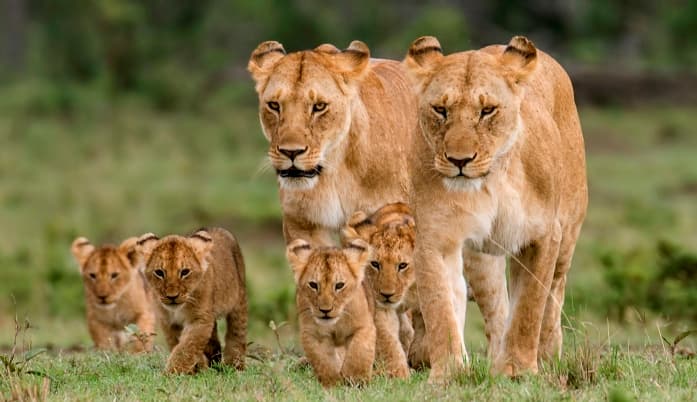
Ngorongoro Crater boasts one of Africa's highest lion densities, with prides numbering up to 20 individuals roaming defined territories across the crater floor. You watch mesmerised as a dominant male patrols his domain, his mane rippling in the breeze, while lionesses hunt cooperatively, their tawny forms moving with predatory grace through the grasslands. Cubs play-fight in the shade of termite mounds, learning the skills that will sustain their pride. Unlike the nomadic lions of the Serengeti, these crater residents maintain permanent territories, offering predictable viewing opportunities. Witness the complex social dynamics of pride life, from affectionate grooming to territorial disputes, in a setting where you can observe multiple prides without leaving the crater.
Maasai Cultural Encounters
Beyond the wildlife, Ngorongoro Crater introduces you to the Maasai people, whose traditional way of life has persisted alongside the modern world. You visit a Maasai village on the crater rim, where warriors in red shukas demonstrate spear-throwing and jumping dances, their voices rising in rhythmic chants that echo across the plains. Women adorned with intricate beadwork share stories of cattle herding and lion encounters, while children herd goats with sticks. These cultural experiences, often included in safari packages, provide insight into a pastoral lifestyle unchanged for centuries. Respectful visits support community conservation efforts, with proceeds funding schools and healthcare. The Maasai's deep connection to the land adds profound cultural depth to your wildlife safari.
Olmoti Crater and Seneto Viewpoints
For panoramic perspectives, ascend to Olmoti Crater on the eastern rim, where the entire Ngorongoro basin spreads out like a living tapestry beneath your feet. The 3,000-metre-high viewpoint offers sweeping vistas of the crater floor, with Lake Magadi's pink waters contrasting against the green grasslands. Alternatively, the Seneto viewpoint provides a different angle, where you can spot wildlife from afar using binoculars. These elevated positions allow you to appreciate the crater's scale and geological majesty, formed by a massive volcanic eruption millions of years ago. Guided walks along the rim trails reveal hidden archaeological sites and diverse birdlife. The changing light throughout the day transforms the landscape, making multiple visits worthwhile.
Best Time to Visit
Ngorongoro Crater offers year-round wildlife viewing, but the dry season from June to October provides the clearest conditions for game drives and crater floor exploration. During these months, animals congregate around permanent water sources, making sightings more predictable and concentrated. The short rains in November and December bring lush greenery but can make tracks muddy and visibility challenging. The long rains from March to May transform the crater into a verdant paradise, though afternoon showers may disrupt activities. Peak season runs from July to September, when European and North American visitors arrive, pushing accommodation prices higher. Shoulder seasons in April-May and October-November offer good value with fewer crowds.
Best overall: June to October (dry season, clear skies, concentrated wildlife)
Wildlife peak: July to September (peak migration and breeding season)
Budget travel: November to May (lower prices, fewer tourists)
Avoid: March to May (heavy rains can make crater access difficult)
Getting There
Most visitors reach Ngorongoro Crater via Kilimanjaro International Airport (JRO) in Arusha, Tanzania's safari capital, with direct flights from London taking approximately 9 hours and from Dubai around 5 hours. Nairobi's Jomo Kenyatta International Airport serves as a secondary gateway, with connections to Arusha via domestic flights taking about 1 hour. Key airlines include KLM, Turkish Airlines, Emirates, and Ethiopian Airlines for international routes, while Air Tanzania and Precision Air handle regional connections. From Arusha, the crater lies about 3 hours drive via paved roads to the Ngorongoro Conservation Area entrance. Some luxury camps offer private airstrips for light aircraft transfers, reducing travel time to under 30 minutes from Arusha.
Visa & Entry Requirements
Tanzania offers visa on arrival for most nationalities at Kilimanjaro International Airport and other major entry points, with a cost of $50 for stays up to 90 days. Citizens of the United States, United Kingdom, Canada, Australia, and most European countries qualify for this streamlined process. Your passport must remain valid for at least 6 months beyond your planned departure date. Yellow Fever vaccination is required if you are arriving from or have recently visited an endemic area. For the latest visa information, consult the Tanzanian Immigration Department website or your local embassy. While visa on arrival is convenient, applying online in advance can save time at busy airports.
Getting Around
Within Ngorongoro Conservation Area, you navigate primarily by 4x4 safari vehicles, which provide the necessary ground clearance for crater descents and rough terrain. Most visitors join guided tours from Arusha, where experienced drivers combine game viewing with safety and local knowledge. Self-drive options exist but require a special permit and 4x4 vehicle, though guided safaris remain the preferred choice for wildlife enthusiasts. Transfers between lodges and the crater gate typically take 1-2 hours, with well-maintained dirt roads connecting accommodation areas. For multi-day itineraries combining Ngorongoro with the Serengeti, overland transfers via 4x4 or minibus take 4-6 hours depending on starting points.
Accommodation Guide
Ngorongoro Crater offers accommodation ranging from basic lodges to ultra-luxury tented camps, all situated on the crater rim to maximise wildlife access. Budget options include simple guesthouses and hostels in nearby Karatu town, starting at $30-50 per person per night, providing basic amenities with shared facilities. Mid-range lodges like those near the conservation area gate offer comfortable rooms with private bathrooms, ranging from $80-200 per person, including meals and basic game drives. Luxury experiences feature crater-view suites and personalised service, costing $250-800 per person per night. For the ultimate safari immersion, consider ultra-luxury mobile tented camps that move with the wildlife, priced at $500-1500 per person for all-inclusive packages featuring gourmet dining and expert guides.
Food & Culture
Tanzanian cuisine blends Swahili coastal influences with inland Maasai traditions, where you savour ugali, a stiff maize porridge served with vegetable stews or grilled meats, accompanied by the tangy fermented milk drink maziwa lala. Fresh Nile perch from Lake Victoria appears on many menus, grilled with local spices and served with coconut rice. Maasai cultural etiquette emphasises respect for elders and communal eating, where you share meals from a central pot using your right hand. During visits to Maasai villages, you participate in traditional ceremonies and learn about cattle's central role in their society. The annual Ngorongoro Festival celebrates Maasai culture with music, dance, and traditional games, offering visitors a chance to engage with living heritage.
Budget & Cost Guide
Planning a Ngorongoro Crater safari requires careful budgeting, with costs varying significantly based on accommodation and activity choices. Budget travellers can manage on $100-150 per day, staying in basic lodges and using public transport, with meals costing $10-20 and basic game drives around $50. Mid-range visitors typically spend $200-400 per day, including comfortable lodges, guided safaris, and restaurant meals. Luxury safari-goers face $500+ per day for premium camps, private vehicles, and all-inclusive packages. The Tanzanian Shilling serves as local currency, though USD is widely accepted in tourist areas. Safari costs dominate expenses, with conservation area entry fees adding $75-100 per person, making advance planning essential for cost control.
Budget traveller: ~$100–$150 per day
Mid-range traveller: ~$200–$400 per day
Luxury traveller: $500+ per day
Travel Tips & Safety
Malaria prophylaxis is essential for Ngorongoro visits, with mefloquine or atovaquone-proguanil recommended for most travellers, though you should consult a travel health clinic for personalised advice. Comprehensive travel insurance covering safari activities, medical evacuation, and trip cancellations is crucial given the remote location. Stay aware of wildlife during game drives, keeping vehicle windows closed and following guide instructions. Pack layers for variable crater weather, including rain gear for unexpected showers and sun protection for intense equatorial sun. Respect Maasai cultural sites by asking permission before photographing people. While generally safe, avoid isolated areas after dark and keep valuables secure in lodge safes.