Ruins of Carthage (Tunisia) travel guide
Africa Travel Bookings
· 5 min read
Stand on the hill of Byrsa and look out toward the Gulf of Tunis, and it takes only a moment to understand why Carthage was built here. The view is sweeping, the sea crossing to Sicily is visible on a clear day, and the low ridges running inland feel like a natural fortification. This was once the largest city in the ancient world outside Rome itself — a Phoenician foundation that grew into a Mediterranean superpower, fought three devastating wars against Rome, was razed to its foundations in 146 BCE and then rebuilt by the Romans into one of their greatest imperial cities. The ruins of Carthage spread across a wide coastal plateau north of Tunis, interspersed with modern villas and gardens, and the combination of ancient remains and contemporary Tunisian life gives the site an unusual, layered atmosphere that no other North African heritage destination quite replicates. A UNESCO World Heritage site since 1979, Carthage is one of the most historically significant places on the African continent — and one of the most undervisited. This guide covers what to see, when to go, and how to plan your visit to this remarkable ancient city.
Why Visit Ruins of Carthage (Tunisia)
Carthage carries a weight of history that few ancient sites can match. This is the city of Hannibal Barca, who led his army with war elephants across the Alps to threaten Rome itself. It is the city that Rome fought three Punic Wars to destroy, and then — unable to resist the location — rebuilt as a great Roman capital. It is the birthplace of Tertullian and Augustine, two of the most important thinkers in early Christian history. And it sits on a peninsula of extraordinary beauty, with the sea on three sides and views of the Gulf of Tunis in every direction. Compared to the Nile Valley monuments of Egypt, Carthage offers something different: a site of Phoenician, Roman, Christian and Byzantine layers accumulated over 1,300 years of continuous habitation, spread across a wide area that requires time and curiosity to appreciate properly. For travellers serious about Mediterranean history, it is one of the essential sites on the continent.
Top Attractions & Experiences
Antonine Baths
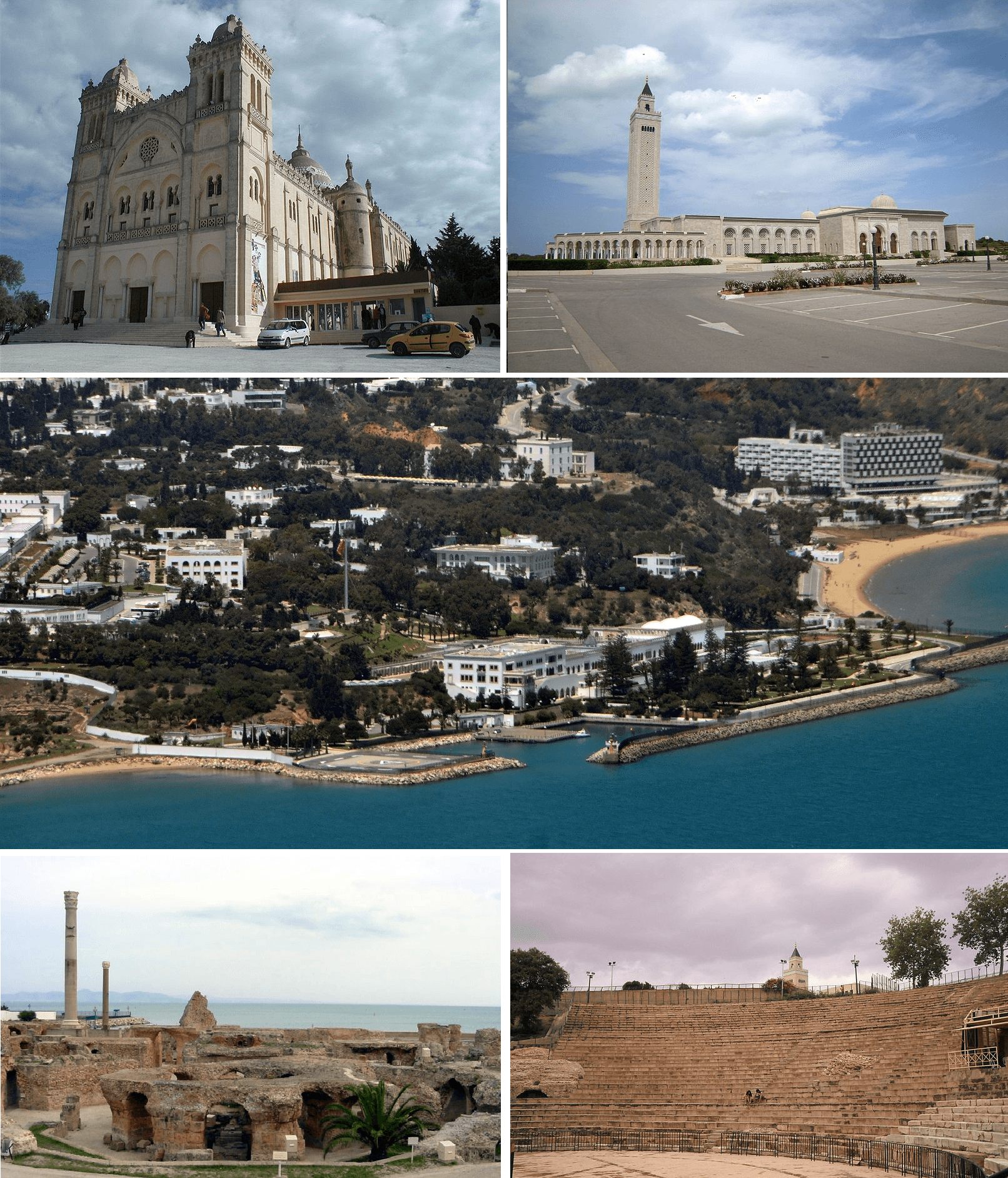
The Antonine Baths are the largest Roman baths in North Africa and one of the most impressive structures in Carthage. The bath complex is wide and ruined, with arches, courtyards and a sense of the original grandeur. Visitors can walk around the pools and imagine the steam that once filled the halls.
Tophet and Necropolis
The Tophet is an ancient burial ground associated with the early Carthaginian civilisation. It is a powerful reminder of the city’s Phoenician roots, with rows of stelae and funerary remains. The nearby necropolis adds another layer of history, showing how Carthage was lived in and honoured by successive cultures.
Carthage Amphitheatre
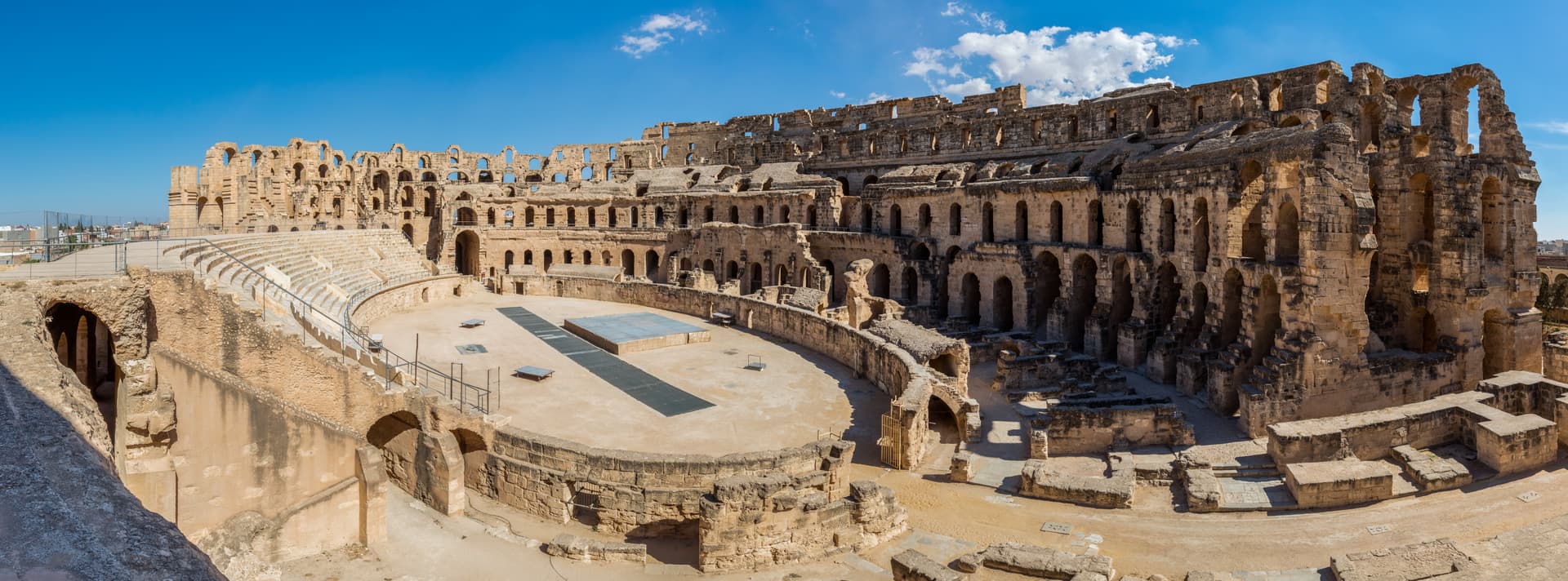
The Roman amphitheatre in Carthage is a well-preserved ruin where gladiators once entertained crowds. The arena is set into the landscape and has a series of stone steps and arches. It is an accessible site that visitors can explore on foot.
Byrsa Hill
Byrsa Hill is the central mound of ancient Carthage and offers sweeping views of the ruins and the sea. The hill is the location of an archaeological museum and provides a sense of how the city was organised in antiquity. The views from the top are a highlight for many visitors.
Coastal Ruins Walk
A walk along the coastal route near the ruins connects Carthage with nearby sites such as Sidi Bou Said and the modern coastal villas. The sea breeze and the white ruins make this a pleasant excursion, especially in the late afternoon. It is a good way to enjoy both the archaeological remains and the Mediterranean setting.
Best Time to Visit
Carthage is a largely outdoor site spread across several square kilometres, which makes the weather highly relevant to the quality of your visit.
April to June is the ideal window. Temperatures are comfortable (18°C–26°C), spring flowers grow between the ruins, and the number of visitors is manageable. This is also the best season for photography: the light is soft and warm, and the ruins glow in the afternoon.
September and October offer similar conditions after the summer heat, with the added benefit of lower accommodation prices and shorter queues at the museum.
Best overall: April to June, September to October
Peak season: July to August — very hot, more tourists
Budget travel: November to March — cooler, quieter, cheaper
Avoid: mid-July to mid-August for those sensitive to heat
Winter months are cool and sometimes rainy but genuinely pleasant for visitors from northern climates. The ruins are almost empty in January and February, and the museum is never crowded. The absence of summer haze also makes views from Byrsa Hill particularly clear.
Getting There
The nearest international airport is Tunis-Carthage International Airport (TUN), which sits on the edge of the archaeological zone — literally within the ancient city's boundaries. Airlines serving Tunis include Tunisair, Air France, Lufthansa, Turkish Airlines, Royal Air Maroc and several low-cost carriers operating from European cities. From London, flight time is approximately two and a half hours; from Paris, around two hours; from Dubai, approximately five hours.
From the airport, Carthage is reachable by taxi in 10 to 15 minutes for around 15–25 Tunisian dinars. The TGM suburban train line from Tunis Marine station runs through the Carthage zone, with three stops serving different parts of the site: Carthage Hannibal, Carthage Dermech and Carthage Byrsa. Each station is within walking distance of a cluster of ruins. The TGM is inexpensive and reliable, and using it to hop between stops is the most practical way to cover the spread-out site without a car.
Visa & Entry Requirements
Tunisia offers visa-free entry for many Western passports for visits of up to 90 days. Check the Tunisian Ministry of Foreign Affairs for the latest visa policies. Passports should be valid for six months beyond the planned travel date.
There are no routine vaccination requirements for most travellers, but Yellow Fever vaccination is needed if arriving from a high-risk country. Always verify health and entry rules before travel.
Getting Around
The Carthage archaeological zone is unusually spread out — the individual sites (baths, Tophet, harbours, theatre, hilltop museum) are separated by distances of one to two kilometres, too far to cover all in a single walk without a plan. The most efficient approach is to use the TGM train to move between clusters: start at the Antonine Baths near Carthage Hannibal station, walk up to Byrsa Hill and the museum, then take the train south to the harbour sites.
Pedestrian paths connect most of the key sites and are marked on site maps available at the museum. A full visit covering all major ruins takes four to five hours at a comfortable pace. Hiring a local guide for a half-day tour, available from the museum entrance, adds significant historical depth to what can otherwise feel like an abstract arrangement of stone foundations. Guides charge approximately $30–50 for a two-hour tour.
Accommodation Guide
Most visitors to Carthage base themselves in Tunis city, the nearby coastal suburb of La Marsa, or the neighbouring village of Sidi Bou Said.
Budget (under $80 per night): Central Tunis offers a wide range of budget hostels and guesthouses from $20–50 per night, all within easy TGM reach of Carthage. The Medina quarter has several well-run budget options inside restored traditional townhouses.
Mid-range ($80–$250 per night): Mid-range hotels in La Marsa and the Gammarth coast are well-placed for Carthage access. These typically offer comfortable rooms, sea-facing terraces and full breakfast. Several boutique hotels in the La Marsa area occupy converted colonial-era villas and provide an atmospheric base at $100–$180 per night.
Luxury ($250+ per night): Premium hotels along the Gammarth coast offer five-star amenities including private beach access, multiple restaurants and spa facilities, within 20 minutes of the Carthage ruins. These properties are ideal for travellers combining heritage tourism with a comfortable coastal stay. Prices run $280–$500+ per night for quality suites.
Food & Culture
The food near Carthage draws on the same Mediterranean-Tunisian tradition found throughout the Tunis coastal region. Grilled fish, brik (a crispy pastry filled with egg and tuna), harissa-spiked salads and olive-oil-dressed vegetables form the backbone of the local diet. The coastal neighbourhood of La Marsa, a short TGM ride away, has some of the best restaurants in greater Tunis, ranging from informal seafood grills on the beachfront to polished restaurants serving contemporary Tunisian cuisine.
Culturally, Carthage rewards visitors who approach it with genuine curiosity rather than checklist efficiency. The site is layered: you may find Punic burial urns a few metres from a Roman mosaic floor, and Byzantine church foundations built over Roman baths. This layering is the point. Dress modestly when moving through the residential neighbourhoods around the ruins, and respect the active community that surrounds the archaeological zone.
The broader cultural context of Carthage is also rich. This was the city that produced Augustine of Hippo, one of the most influential thinkers in Western history, who studied in Carthage in the fourth century CE and wrote about its streets in his Confessions. Standing in these ruins with that heritage in mind transforms what might otherwise be an abstract archaeological visit into something much more resonant.
Budget & Cost Guide
Carthage is excellent value by international heritage-site standards, with modest entry fees and inexpensive public transport.
Budget traveller: ~$50–$80 per day
Mid-range traveller: ~$110–$180 per day
Luxury traveller: $220+ per day
The main entry ticket for the Carthage archaeological zone covers several sites and costs approximately 12–15 Tunisian dinars (around $4–$5 at current rates). The Carthage National Museum requires a separate ticket of similar value. A half-day guided tour adds $30–50.
Budget travellers staying in Tunis, eating local food and using the TGM can cover a full day at Carthage for under $40 total including accommodation contribution. Mid-range travellers in La Marsa with a private guide and good restaurant lunch will spend $130–$170 per day. Luxury travellers in Gammarth resorts with private transfers and dinner at the better Tunis restaurants will spend $250 and above.
The Tunisian dinar (TND) is the local currency. USD and euros are accepted at larger hotels and some restaurants, but local cash is needed for the TGM, small cafes and site ticket offices.
Travel Tips & Safety
Wear sun protection. The Carthage ruins are almost entirely exposed to the Mediterranean sun, with little shade between the major structures. Sunscreen, a hat and water are essential for any visit longer than an hour.
Get a site map from the museum. The ruins are spread across several square kilometres and not all sites are well-signposted. A map from the Carthage National Museum or the Byrsa Hill visitors desk will save significant time and prevent you from missing key areas.
Combine with Sidi Bou Said. The two sites are eight minutes apart by TGM and complement each other perfectly. A morning at Carthage followed by an afternoon at Sidi Bou Said makes an outstanding full-day itinerary from Tunis.
Health and vaccinations. Tunisia has no mandatory vaccination requirements beyond Yellow Fever for arrivals from endemic countries. Routine vaccines including Hepatitis A and typhoid are advisable. Tap water in Tunis and coastal areas is generally safe but mineral water is widely available.
Carthage is very safe for tourists. The archaeological zone is monitored, and the residential neighbourhoods around it are calm and low-crime. Keep standard travel precautions in mind — secure valuables and be aware in crowded transport — but this is not a high-risk environment.