Sidi Bou Said (Tunisia) travel guide
Africa Travel Bookings
· 5 min read
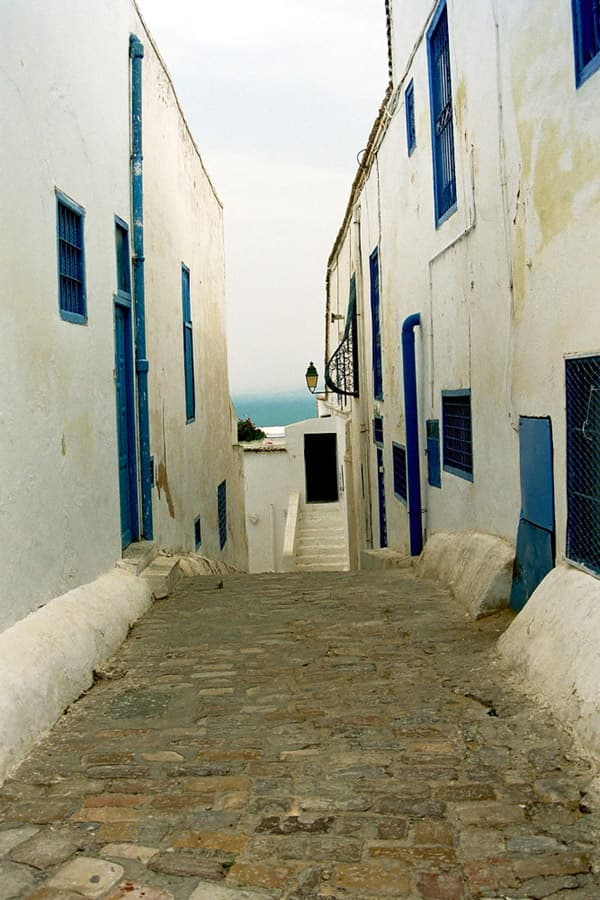
Perched on a cliff above the Gulf of Tunis, the village of Sidi Bou Said has been stopping people in their tracks for centuries. Its blue-painted doors and shutters frame walls of dazzling white, bougainvillea tumbles over courtyard walls, and every narrow lane ends in a view of sea and sky that is almost compositionally perfect. This is one of those rare places where beauty is not a marketing claim but an architectural fact — where the combination of Andalusian, Ottoman and North African influences has produced something genuinely singular. The village has drawn artists, writers and intellectuals since the early twentieth century, when the Swiss painter Paul Klee and the composer Baron Rodolphe d’Erlanger settled here and wrote about the light as though it were a living thing. Sidi Bou Said sits 20 kilometres from Tunis, making it one of the most accessible day trips in North Africa, yet the village retains enough calm and character to reward a longer stay. This guide covers what to see and do, the best time to visit, practical logistics and cultural context.
Why Visit Sidi Bou Said (Tunisia)
Sidi Bou Said is one of the most photogenic villages in all of Africa and the Mediterranean world, and yet it is not merely a backdrop for photographs. The village has real cultural depth: it sits above the ruins of ancient Carthage, it has a long and documented artistic history, and its cafes serve some of the finest mint tea in Tunisia. Unlike the more chaotic medinas of Tunis or Sousse, Sidi Bou Said is a place where a slow afternoon spent wandering, reading and watching the sea is the entire agenda, and that agenda is extremely well-served. The views from the clifftop paths across the Gulf of Tunis are remarkable, and on a clear day you can see the Cap Bon peninsula stretching away to the south. It is also one of the few Tunisian destinations equally well-suited to first-time visitors and seasoned travellers looking for something quieter and more refined.
Top Attractions & Experiences
Blue-and-White Streets
The main attraction in Sidi Bou Said is the village itself, with steep lanes lined by whitewashed walls and blue shutters. Walking the streets feels like moving through a living painting, with hidden courtyards and flower-filled balconies. The village is compact, so visitors can experience much of it in a few hours.
Café des Nattes
Café des Nattes is an iconic spot where tea and conversation have been served for decades. It offers a terrace overlooking the bay and a chance to relax in a traditional setting. The café is best in the late afternoon when the light softens over the Mediterranean.
Dar el-Annabi Museum
Dar el-Annabi is a restored 17th-century palace that now serves as a museum. Its rooms display Tunisian furniture, ceramics and artefacts from the city’s past. The courtyard is particularly beautiful and gives a good sense of the wealthy merchant houses that once flourished here.
Sidi Bou Said Lighthouse
The lighthouse near the village offers a calm walk and panoramic views of the coastline. It is a short stroll from the main square and feels far removed from the busier cafés. The lighthouse is a good vantage point for watching the sunset over the Gulf of Tunis.
Art Galleries
Sidi Bou Said has a small cluster of art galleries selling ceramics, paintings and local crafts. These galleries reflect the village’s long association with artists and writers. Exploring them reveals a mix of traditional Tunisian design and contemporary works.
Best Time to Visit
Sidi Bou Said is a year-round destination, but the experience changes significantly with the season.
April to June is arguably the finest period. The Mediterranean coast is warm without being oppressive, wildflowers grow along the clifftop paths, and the village is lively but not overwhelmed with summer tourists. The sea is still slightly cool for swimming but the light is exceptional.
September and October offer similarly pleasant conditions after the summer peak, with warm afternoons, quieter streets and a slightly more local atmosphere. September in particular combines the last of the summer warmth with noticeably fewer crowds.
Best overall: April to June, September to October
Peak season: July to August — busy and hot
Budget travel: November to March — quieter and cheaper
Avoid: mid-July to mid-August for those sensitive to heat and crowds
July and August see the highest temperatures (32°C–38°C) and the most visitors, as Tunisian families from Tunis and European tourists combine to fill the streets and cafes. The village remains beautiful but loses some of its tranquillity.
Winter months from November to February are the quietest and cheapest, with cool, sometimes rainy weather. The village takes on a different, more intimate character, and guesthouses often drop their rates by 20–30 per cent.
Getting There
The nearest international airport is Tunis-Carthage International Airport (TUN), located approximately 10 kilometres from Sidi Bou Said. The airport is served by Tunisair, Air France, Turkish Airlines, Transavia, Vueling and several other European carriers. From London, flights take around two and a half hours; from Paris, around two hours; from Dubai, approximately five hours.
From the airport, a taxi to Sidi Bou Said costs approximately 20–30 Tunisian dinars and takes 20 to 30 minutes depending on traffic. The most charming option, however, is the TGM suburban train, which runs from Tunis Marine station in the city centre through Carthage and La Marsa, stopping at Sidi Bou Said station. The journey from Tunis Marine takes around 20 minutes, costs under 2 dinars and delivers you to a station just below the village centre. The TGM is reliable, frequent and a pleasant way to arrive.
Visa & Entry Requirements
Tunisia offers visa-free entry for many Western passports for stays of up to 90 days. Check the Tunisian Ministry of Foreign Affairs website for the latest rules and any update to visa policies. Passports should be valid for six months beyond the travel date.
Yellow Fever vaccination is required only for travellers arriving from countries with a Yellow Fever risk. Otherwise, there are no standard vaccination requirements for Tunisia beyond routine immunisations.
Getting Around
Sidi Bou Said is best explored entirely on foot. The village is compact \u2014 most attractions are within a 10-minute walk of the main square \u2014 and many of the most interesting lanes are too narrow for vehicles. The main Rue Habib Thameur runs steeply down from the mosque to the lower village, with narrower alleys branching left and right. The lighthouse walk and coastal path require moderate fitness but are entirely accessible without specialist equipment.
For travel beyond the village, the TGM suburban train is the most efficient option. It connects Sidi Bou Said with the Carthage sites, La Marsa beach and central Tunis with trains running every 20 to 30 minutes throughout the day. Taxis are available at the main road below the village and are practical for visiting Carthage or reaching the airport directly. Renting a car is not necessary and not recommended given the narrow streets and parking constraints.
Accommodation Guide
Sidi Bou Said is a small village and accommodation options are correspondingly limited but well-chosen. The best places to stay are within or immediately adjacent to the village itself.
Budget (under $80 per night): A small number of simple guesthouses in the village offer clean rooms from $30–60 per night, some with courtyard gardens and shared terraces with sea views. Budget travellers can also stay in Tunis city centre and take the TGM train to the village each morning.
Mid-range ($80–$250 per night): Boutique guesthouses and small hotels within the village are the ideal choice at this level. Several have been converted from historic merchant houses, with tiled courtyards, wooden-beamed rooms and private terraces looking toward the Gulf of Tunis. Expect to pay $90–$180 per night for a well-furnished room with breakfast.
Luxury ($250+ per night): For premium accommodation, most luxury travellers stay in the nearby coastal suburb of La Marsa or in Tunis itself at the historic hotels of the Gammarth and La Marsa area. Day trips to Sidi Bou Said from these bases are straightforward by TGM or taxi. Some boutique properties in the village itself occupy converted palaces at the upper end of the mid-range tier and are excellent value for the quality of the setting.
Food & Culture
The food culture of Sidi Bou Said is defined by a relaxed Mediterranean-Tunisian sensibility rather than the more intense street-food tradition of Tunis medina. Café culture dominates: most visitors spend significant time sitting over mint tea, kahwa benouss (coffee with pine nuts) and the pistachio or honey-soaked pastries sold on the main square. For something more substantial, grilled fish and seafood are the natural choice given the coastal location, and the restaurants on the clifftop road offer good loup de mer (sea bass), grilled octopus and Tunisian salads dressed with olive oil and harissa.
Brik — a crisp fried pastry filled with egg and tuna — is Tunisia's quintessential street food and available everywhere. Fresh bambalouni (ring doughnuts fried in oil and dusted with sugar) are sold from small stalls on the main street and are best eaten immediately, warm from the oil.
Cultural etiquette in Sidi Bou Said is important. The village is still a living community, not just a tourist attraction, and its residents value courtesy. Dress modestly when entering the village from the beach, particularly during Ramadan. Ask permission before photographing residents or private courtyards. The local community is warm and welcoming to respectful visitors, and a simple Salam greeting opens most conversations.
Budget & Cost Guide
Sidi Bou Said is one of the more affordable high-quality destinations in North Africa, with the exchange rate making Tunisian costs very reasonable for European and US visitors.
Budget traveller: ~$55–$80 per day
Mid-range traveller: ~$110–$180 per day
Luxury traveller: $220+ per day
Budget travellers staying in a modest guesthouse in or near the village, eating at local cafes and using the TGM train will spend $55–80 per day. The main expense is accommodation; food and transport are extremely cheap by international standards.
Mid-range travellers in a boutique guesthouse with breakfast, dining at the better clifftop restaurants and taking occasional taxis will spend $110–$180 per day. This tier allows for comfortable meals, a guided walking tour and perhaps a day excursion to Carthage.
Luxury travellers based in premium Tunis or La Marsa hotels, dining at the best seafood restaurants and using private transfers will spend $220 and above. The Tunisian dinar (TND) is the local currency; USD and euros are widely accepted at hotels and some restaurants but local cash is best for small cafes, markets and the TGM.
Travel Tips & Safety
Wear comfortable shoes. The village lanes are paved with stone cobbles that are uneven underfoot, and several of the main routes involve short but steep climbs. Sandals work on flat days; proper walking shoes are recommended if you plan to take the lighthouse path or the cliff walk.
Arrive early or late. The village receives significant day-tripper traffic from Tunis between 10am and 4pm. Arriving before 9am or after 5pm gives you the streets and cafes in a much calmer, more atmospheric state. Staying overnight and exploring in the evening is the ideal way to experience the village.
Sidi Bou Said is generally very safe for all travellers, including solo women. The main risk is minor pickpocketing in the busier areas during peak hours — keep valuables in a front pocket and be aware in crowded areas on the main square. The village is well-policed and the local community is welcoming.
Combine with Carthage. The ruins of ancient Carthage are a 10-minute TGM ride south of Sidi Bou Said and make an excellent half-day pairing. The two sites together offer a complete picture of Tunis's coastal heritage — ancient Mediterranean history and living North African culture — in a single day trip.
Travel insurance is always recommended, particularly if you plan to extend your trip to other parts of Tunisia.