Sossusvlei & The Namib Desert (Namibia)
Africa Travel Bookings
· 5 min read
You stand atop a towering dune, the crimson sands of the Namib Desert stretching endlessly beneath you like a frozen ocean of fire. The sun hangs low, casting long shadows across the ancient landscape, and in the distance, the stark white clay pan of Sossusvlei gleams like a mirage in the heat haze. This is Namibia's heart of wilderness, where the world's oldest desert meets surreal beauty, and where you can witness the raw power of nature in its most elemental form. Now is the perfect time to explore Sossusvlei and the Namib Desert, as the region offers unparalleled solitude and dramatic landscapes that few other places on Earth can match. This comprehensive travel guide covers everything you need to know about planning your Namib Desert adventure, from the best ways to experience the dunes to practical tips for a seamless journey.
Why Visit Sossusvlei & The Namib Desert
Sossusvlei and the Namib Desert captivate you with their otherworldly beauty, where colossal red dunes rise up to 300 metres high, creating a landscape that feels both timeless and alive. This UNESCO World Heritage site holds the title of the world's oldest desert, with sands that have been shifting for over 55 million years, offering a sense of geological wonder unmatched elsewhere. You will encounter unique wildlife adapted to extreme conditions, from desert elephants to oryx, thriving in an environment where few species survive. Compared to the more crowded dunes of Morocco or the Sahara, Namibia's Namib provides a more accessible and less commercialised experience, with fewer tourists and a deeper connection to nature. The stark contrast between the fiery dunes and the stark white salt pans creates visual spectacles that inspire photographers and adventurers alike, making it a must-visit for those seeking authentic African wilderness.
Top Attractions & Experiences
Dune 45
You approach Dune 45 at sunrise, the sky ablaze with orange and pink hues as you climb the 170-metre-high dune. The sand shifts beneath your feet, warm and soft, and from the summit, you gaze out over a sea of red waves rolling towards the horizon. This iconic dune, so named because it lies 45 kilometres from the Sesriem gate, offers panoramic views that encapsulate the Namib's grandeur. Visitors arrive early to catch the golden hour light, and you can hike to the top in about 30 minutes, though the descent proves trickier. Entry fees apply through the Namib-Naukluft National Park, and guided tours often include this stop as a highlight.
Sossusvlei Pan
You walk across the cracked white clay of Sossusvlei, a vast salt pan that fills with water only during rare rains, creating a surreal mirror effect. Surrounded by towering dunes, this ephemeral lake bed transforms into a photographer's paradise, with skeletal trees like the famous Dead Vlei standing as ancient sentinels. You feel the intense heat radiating from the ground, and the silence is profound, broken only by the occasional wind whistling through the dunes. Access requires a 4x4 vehicle or guided tour, and you should arrive early to avoid the midday sun. The park charges around $10 per person for entry, and it's best experienced in the cooler months.
Dead Vlei
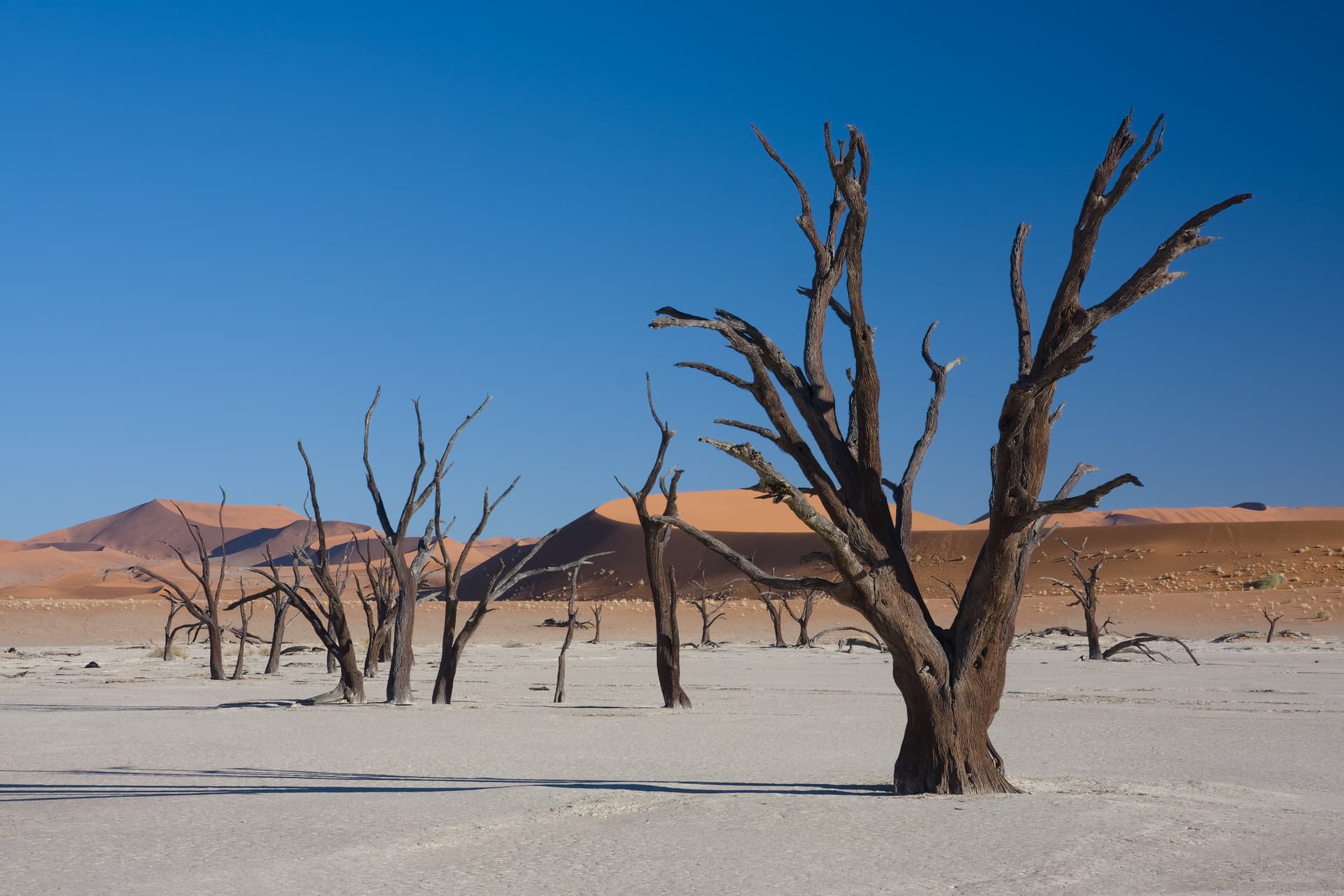
You enter Dead Vlei, a haunting valley where 900-year-old camel thorn trees stand petrified against the white clay, their twisted forms a testament to the desert's harshness. The dunes encroach relentlessly, creating a stark black-and-white contrast that feels like stepping into a Salvador Dali painting. You wander among the trees, feeling the crunch of salt beneath your boots, and the isolation amplifies the sense of timelessness. This area is part of the Namib-Naukluft Park, and you need a permit to enter; guided walks last about two hours. The experience is most vivid at dawn or dusk, when the light plays tricks on the landscape.
Sesriem Canyon
You descend into Sesriem Canyon, a narrow gorge carved by the Tsauchab River through ancient sandstone, revealing layers of geological history spanning millions of years. The canyon walls rise steeply, and you follow the dry riverbed, spotting rock formations and occasional pools of water. This site offers a different facet of the Namib, combining desert scenery with a touch of greenery. You can hike the canyon independently or join a guided tour, and it's a great spot for birdwatching, with species like the pale-winged starling. Entry is included in the park fee, and the canyon is about 1 kilometre long, taking 30-45 minutes to explore.
Big Daddy Dune
You tackle Big Daddy, the tallest single dune in the Namib at 325 metres, a colossal mound of red sand that dwarfs everything around it. The climb is strenuous, with loose sand making each step a challenge, but the reward is a breathtaking 360-degree view over the desert expanse. You feel the wind whipping across the summit, carrying fine grains that sting your skin, and the sense of achievement is palpable. This dune is accessible via 4x4 or guided safari, and it's best visited in the early morning. The park authorities recommend experienced hikers, as the descent can be hazardous.
Desert Wildlife Encounters
You spot a herd of desert elephants, their grey hides camouflaged against the dunes, as they forage for moisture in the arid landscape. These resilient creatures, smaller than their savannah cousins, navigate the harsh terrain with remarkable adaptability. You might also encounter oryx, springbok, and ostriches, all perfectly suited to the desert's extremes. Guided safaris often include wildlife spotting, and you can observe from a safe distance. The Namib's biodiversity surprises many, with over 200 bird species and unique insects thriving here.
Best Time to Visit
You plan your trip to Sossusvlei and the Namib Desert during the cooler months for the most comfortable experience, as temperatures can soar above 40°C in summer. The dry season from May to September offers clear skies and fewer insects, making it ideal for dune climbing and photography. Winter brings cooler nights, with temperatures dropping to around 10°C, and you can witness occasional fog rolling in from the Atlantic. The wet season from December to April sees rare rains that transform the landscape, but roads become impassable, and heat intensifies. Peak season runs from June to August, when crowds increase and prices rise, while shoulder seasons in April-May and September-October provide a balance of good weather and fewer visitors.
Best overall: May to September
Wildlife peak: Year-round, but best in dry season
Budget travel: October to April
Avoid: December to February — extreme heat and potential flooding
In the dry season, you enjoy stable weather with daytime highs around 25-30°C, perfect for outdoor activities. The wet season, though hot, brings the chance of seeing Sossusvlei filled with water, a rare spectacle. Festivals like the Namib Desert Environmental Education Trust events occur sporadically, but the desert's appeal lies in its consistent beauty.
Getting There
You fly into Hosea Kutako International Airport near Windhoek, Namibia's capital, which serves as the main gateway for international flights. Airlines like Air Namibia, South African Airways, and Ethiopian Airlines connect Windhoek to major hubs in Europe, the Middle East, and Africa. Flights from London take about 11 hours with a stopover, while Dubai offers direct connections via Ethiopian Airlines. From Windhoek, you transfer to Sesriem, the entry point to Sossusvlei, via a domestic flight or a 5-6 hour drive. Regional airlines such as Air Namibia operate short hops to smaller airports closer to the desert. Transit through Johannesburg or Cape Town is common for connections from Asia or the Americas.
Visa & Entry Requirements
You enter Namibia visa-free if you hold a passport from the UK, US, EU countries, or many Commonwealth nations, allowing stays up to 90 days. Citizens of countries like India, China, or Brazil require a visa, obtainable on arrival at the airport for around $80, or via e-visa through the Namibian Directorate of Immigration. Ensure your passport remains valid for at least six months beyond your travel dates. Yellow Fever vaccination is mandatory if you arrive from an endemic area, and you should check for any COVID-related requirements. Always verify the latest rules on the official Namibian government website, as policies can change.
Getting Around
You navigate the Namib Desert primarily by 4x4 vehicle, as standard cars cannot handle the sandy terrain and lack of roads. Guided safari tours provide experienced drivers and vehicles, transporting you from Sesriem to the dunes and back. For independent travel, you rent a 4x4 in Windhoek and drive yourself, but this requires off-road experience and permits. Within the park, you explore on foot or with guides, as no public transport exists. Road conditions vary, with gravel tracks leading to Sesriem, and you should carry spare tyres and water. Guided options suit most visitors, offering safety and expertise in this remote area.
Accommodation Guide
You choose from a range of accommodation near Sesriem, catering to different budgets and preferences. Budget options include basic guesthouses and campsites around $50-80 per person per night, offering simple facilities with shared amenities. Mid-range lodges like those at Sesriem Canyon provide comfortable rooms with views of the dunes, costing $80-250 per night. Luxury experiences feature exclusive desert camps with private guides and gourmet meals, ranging from $250-1,000+ per night. Areas like Sesriem concentrate most stays, with some eco-lodges promoting sustainability. For ultra-luxury, private concessions offer intimate camps in the dunes, at $500-2,000+ per person per night, including all-inclusive safaris.
Food & Culture
You savour Namibia's culinary scene, featuring dishes like biltong, dried meat seasoned with spices, and potjiekos, a slow-cooked stew of meat and vegetables. Oryx meat appears on menus, grilled or in stews, reflecting the country's hunting heritage. Culturally, you respect the Himba people's traditions, greeting elders with both hands and avoiding direct eye contact as a sign of respect. The annual Namib Desert Horse Trail celebrates equestrian culture, with riders traversing the dunes. Namibia's blend of German, African, and colonial influences creates a unique cultural tapestry, and you engage with locals through community visits or guided cultural tours.
Budget & Cost Guide
You budget for a Namib Desert trip based on your travel style, with costs varying widely. A budget traveller spends around $100-150 per day, covering basic accommodation, simple meals, and park entry fees. Mid-range travel costs $150-300 per day, including comfortable lodges and guided tours. Luxury experiences exceed $300 per day, with high-end camps and private safaris dominating expenses. The Namibian Dollar (NAD) is the local currency, but USD is widely accepted. Safari activities form the bulk of costs, with guided dune tours at $100-200 per person. Factor in transport from Windhoek, around $200-400 for a return transfer.
Budget traveller: ~$100–$150 per day
Mid-range traveller: ~$150–$300 per day
Luxury traveller: $300+ per day
Travel Tips & Safety
You prepare for the Namib by carrying plenty of water, at least 5 litres per person per day, and wearing sun protection due to intense UV rays. Malaria prophylaxis is unnecessary here, but vaccinations for hepatitis and typhoid are advisable. Purchase comprehensive travel insurance, essential for remote areas where medical evacuation could cost thousands. Stay on marked paths to avoid getting lost in the dunes, and inform someone of your plans. Pack layers for temperature swings, from hot days to cool nights, and sturdy shoes for sand walking. The desert is generally safe, but respect wildlife and follow guide instructions.