The Garden Route (South Africa) Travel Guide
Africa Travel Bookings
· 5 min read
You stand on the edge of a cliff, the Indian Ocean crashing against the rocks below as a pod of southern right whales breaches in the distance. The Garden Route stretches before you, a ribbon of pristine coastline winding through ancient forests and golden beaches, where the wild heart of South Africa meets the sea. This 300-kilometre stretch from Mossel Bay to Storms River offers a perfect blend of adventure and relaxation, making it one of Africa's most beloved coastal escapes. Now is the ideal time to visit, as conservation efforts have restored whale populations and eco-tourism flourishes. This comprehensive guide covers everything you need to know about planning your Garden Route journey, from hiking the Tsitsikamma trails to spotting marine life off Plettenberg Bay.
Why Visit The Garden Route
The Garden Route captivates with its dramatic coastal scenery, where rugged cliffs plunge into turquoise waters and lush forests hide secret lagoons. Unlike the arid Kalahari or the crowded beaches of the Mediterranean, this South African coastline offers a unique fusion of marine biodiversity and terrestrial wilderness, with opportunities to witness southern right whales in winter and hike through ancient indigenous forests. It holds UNESCO recognition for its biosphere reserves and stands as a global leader in eco-tourism, attracting nature lovers who seek authentic African coastal experiences. The route's compact size allows you to explore diverse ecosystems in a single trip, from the temperate Knysna forests to the subtropical Tsitsikamma coast, creating unforgettable memories of South Africa's natural splendour.
Top Attractions & Experiences
Tsitsikamma National Park
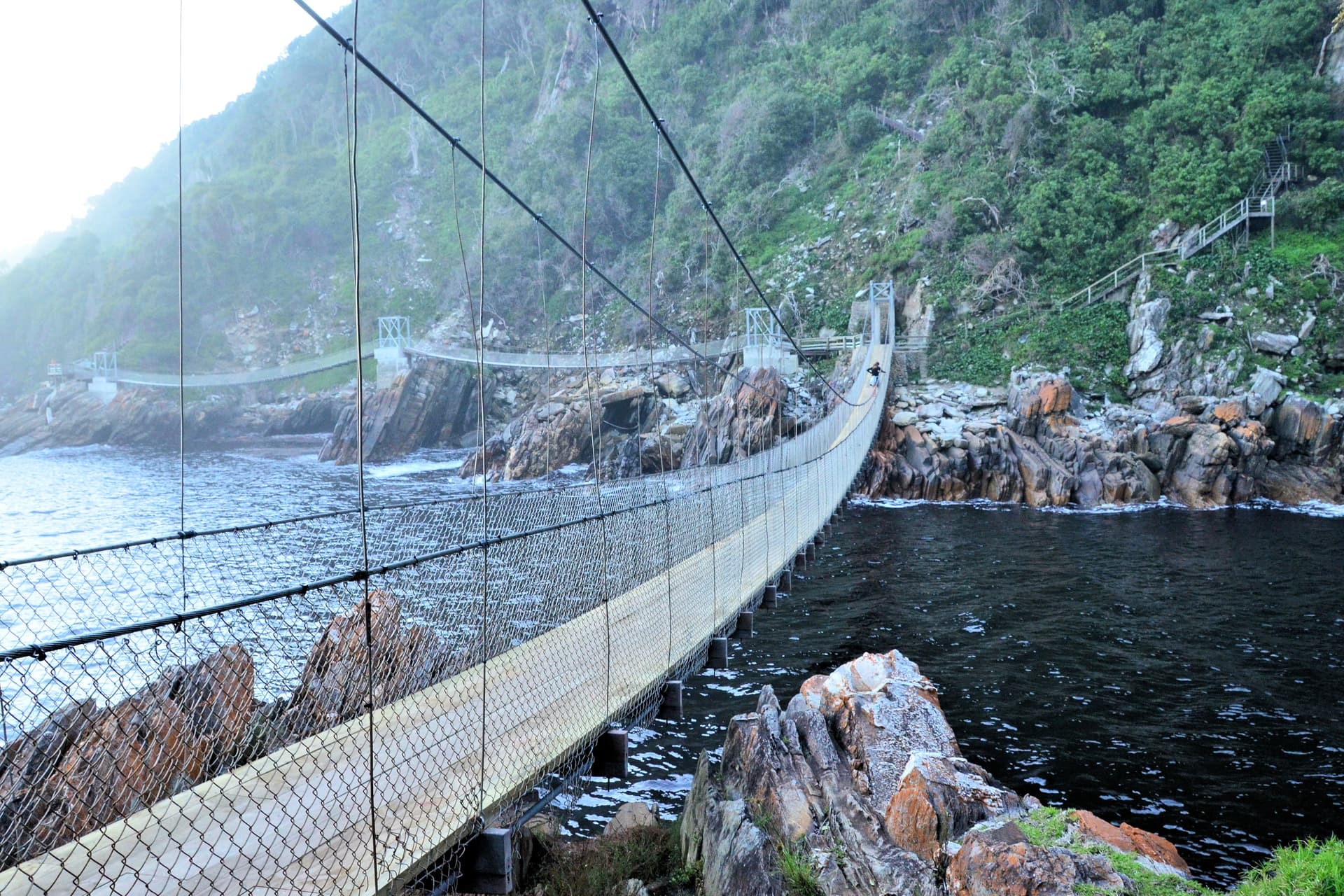
You step onto the suspended bridge at Tsitsikamma, the wooden planks swaying gently over the churning Storms River mouth where fresh and salt water collide in a spectacular display. This marine protected area spans 80,000 hectares of coastal forest and rugged shoreline, offering some of South Africa's most thrilling outdoor adventures. Hike the Otter Trail for multi-day wilderness immersion, or take a boat trip to explore the dramatic coastline and spot seals basking on rocky outcrops. Entry costs around $15 per person, with guided hikes available from $50. The park operates year-round, though winter brings rougher seas and better whale sightings.
Knysna Heads
The twin sandstone sentinels of Knysna Heads rise majestically from the turquoise lagoon, framing a natural harbour that has sheltered ships for centuries. You cruise between these iconic formations on a ferry, feeling the cool sea breeze as dolphins occasionally surface alongside your boat. The heads mark the entrance to one of South Africa's largest estuaries, where you can kayak through mangroves or simply relax on the waterfront promenade. Boat tours run from $25 per person, with sunset cruises offering magical views of the changing light on the cliffs. The area remains accessible throughout the year, though summer crowds peak during school holidays.
Plettenberg Bay Beaches
You sink your toes into the soft white sand of Central Beach, Plettenberg Bay's crown jewel, where the warm Indian Ocean laps at your feet and surfers ride the consistent waves. This coastal town boasts five distinct beaches, each with its own character—from the family-friendly Central Beach to the secluded Robberg Peninsula accessible only by boat. Walk the coastal path for panoramic views, or join a guided turtle tour during nesting season (November to February). Beach access is free, with parking costing around $5 per day. The beaches offer safe swimming conditions, though strong currents can occur, so heed the lifeguard flags.
Wilderness National Park
You glide silently through the waterways of Wilderness National Park in a canoe, the dense reed beds alive with bird calls and the occasional splash of an otter. This 2,500-hectare wetland reserve protects one of South Africa's most important estuaries, where four rivers meet the sea. Cycle the scenic trails, birdwatch from elevated platforms, or take a guided boat tour to learn about the ecosystem. Entry fees start at $10 per person, with canoe rentals available for $20 per hour. The park's boardwalks make it accessible for all abilities, and it's particularly beautiful during the winter rains when migratory birds arrive.
Cango Caves
You descend into the earth at Cango Caves, torch in hand, as your guide illuminates the massive limestone chambers formed over millions of years. These underground wonders near Oudtshoorn feature stalactites, stalagmites, and bizarre rock formations that resemble animals and faces. Take the adventure tour for the highlight experience, crawling through narrow passages to reach the deepest chambers. Tours cost from $15 per person, with the premium adventure option at $25. The caves maintain a constant 18°C year-round, making them a cool escape during summer heat. Guided tours run daily, with audio guides available in multiple languages.
Ostrich Farms and Safari
You approach a towering ostrich at the Cango Ostrich Farm, its powerful legs and curious eyes making you appreciate why these birds are called the "kings of birds." South Africa's ostrich industry began here, and you can now ride these flightless giants or learn about their history on a guided tour. Nearby safari experiences let you spot elephants, lions, and rhinos in private reserves. Farm tours start at $10, while ostrich rides cost $15. The farms operate daily, with shows demonstrating the birds' speed and agility. This unique experience offers insight into South Africa's agricultural heritage.
Whale Watching
You lean over the railing of a whale-watching boat off Plettenberg Bay, binoculars ready as a massive southern right whale surfaces, its blowhole spraying water high into the air. The Garden Route serves as one of the world's best land-based whale watching destinations, with viewing platforms at points like Robberg and Nature's Valley. From June to November, you witness the annual migration as whales calve in these protected waters. Boat tours cost from $30 per person, while land-based viewing is free. The experience includes dolphins, seals, and occasionally orcas, making each trip memorable.
Best Time to Visit
The Garden Route's seasons dramatically influence your experience, with each offering distinct advantages for different types of travellers. Summer (December to February) brings warm weather and family crowds, while winter (June to August) offers whale watching and fewer tourists. Spring and autumn provide comfortable temperatures without the peak season rush.
Best overall: September to November
Whale watching peak: July to October
Beach weather: December to March
Budget travel: April to June
Avoid: December 15 to January 15 — school holidays bring maximum crowds
Summer months offer the warmest water for swimming, with temperatures reaching 25°C and minimal rain. You enjoy long days exploring beaches and hiking trails, though accommodation prices rise significantly. Whale watching peaks in winter, when southern right whales migrate to the area, and you can spot them from land or boat. Autumn brings mild weather and the stunning fynbos flowering season, while spring offers good wildlife viewing as animals emerge from winter dormancy.
Getting There
You fly into Cape Town International Airport (CPT), the primary gateway to the Garden Route, with direct flights from London taking around 11 hours. Major airlines like British Airways, Virgin Atlantic, and South African Airways serve this route, with connections through Johannesburg or Dubai. From Cape Town, domestic flights to George Airport (GRJ) take just 45 minutes, positioning you at the route's eastern end.
Port Elizabeth (PLZ) serves as an alternative entry point, with flights from Johannesburg taking 1.5 hours. Emirates and Qatar Airways offer convenient connections through the Middle East. The route begins 400km east of Cape Town, so factor in a 5-hour drive or short flight to reach Mossel Bay.
Regional flights connect Johannesburg to George, with Airlink and South African Airways operating this service. International visitors often combine Cape Town with the Garden Route, using the N2 highway for scenic overland travel.
Visa & Entry Requirements
South Africa offers visa-free entry for citizens of the UK, US, Canada, Australia, and most EU countries for stays up to 90 days. You simply present your passport at immigration, with no advance visa application required. Citizens of countries like India, China, and Brazil need visas, which you apply for online through the South African Department of Home Affairs website.
Your passport must remain valid for at least six months beyond your planned departure date. No vaccinations are mandatory for entry, though yellow fever certificates are required if you travel from or through infected areas. Malaria prophylaxis is recommended for certain areas, but not for the Garden Route itself. Always verify current requirements with your local South African embassy, as policies can change.
Getting Around
You navigate the Garden Route primarily by car, with the well-maintained N2 highway connecting all major towns. Rent a vehicle in Cape Town or George for flexibility, though guided tours offer convenience without driving stress. The 300km route takes 4-5 hours to drive end-to-end, but you spend most time exploring side roads and stopping at viewpoints.
Guided bus tours operate from Cape Town, providing transportation and accommodation packages. For independent travel, hire a car with GPS, as some attractions require driving on gravel roads. The route's compact nature makes it ideal for self-drive adventures, with ample parking at all major sites.
Within towns like Knysna and Plettenberg Bay, taxis and rideshares provide local transport. For Tsitsikamma, shuttle services run from nearby towns. Road conditions are generally good, though winter rains can cause landslides on coastal sections.
Accommodation Guide
The Garden Route offers accommodation ranging from beachfront resorts to forest lodges, with concentrations in Knysna, Plettenberg Bay, and Wilderness. Budget options include guesthouses and hostels, while mid-range choices feature boutique hotels and self-catering cottages. Luxury establishments provide exclusive experiences with ocean views and private plunge pools.
Budget: Under $80 per night — Look for guesthouses in town centres or backpacker hostels near beaches. These offer clean, basic facilities with shared kitchens.
Mid-range: $80–$250 per night — Boutique hotels and beachfront apartments dominate this category, with many offering sea views and on-site restaurants. Self-catering options provide value for families.
Luxury: $250–$1,000+ per night — Exclusive lodges and resorts feature private villas, spa facilities, and personalised service. Some include guided activities and gourmet dining.
Areas like Plettenberg Bay concentrate high-end options, while Wilderness offers more affordable forest retreats. Book ahead during peak season, as popular spots fill quickly.
Food & Culture
You savour the Garden Route's culinary scene, where fresh seafood meets indigenous ingredients in dishes like bobotie and sosaties. Try the local oysters from Knysna Lagoons, renowned for their briny sweetness, or sample buchu-infused gin, made from the region's native fynbos plants. The area's wine route complements meals with crisp whites from nearby vineyards.
Culturally, you encounter the rich heritage of the Khoisan people, whose click languages and rock art date back thousands of years. Respect local customs by greeting elders first and learning basic Xhosa phrases. The annual Knysna Oyster Festival celebrates the region's maritime heritage, while the Plettenberg Bay SARDI show highlights local arts and crafts.
Budget & Cost Guide
The Garden Route offers varying costs depending on your travel style, with accommodation and activities forming the largest expenses. Budget travellers focus on free beaches and hiking, while luxury visitors invest in guided tours and premium lodges.
Budget traveller: ~$80–$120 per day
Mid-range traveller: ~$150–$250 per day
Luxury traveller: $300+ per day
Breakdown includes accommodation ($30–$200), food ($20–$50), transport ($20–$40), and activities ($20–$100). The South African rand (ZAR) is the local currency, with USD widely accepted at tourist spots. Park entries and guided tours represent major costs, while self-catering reduces food expenses significantly.
Travel Tips & Safety
You prepare for the Garden Route by obtaining comprehensive travel insurance, essential for outdoor activities and potential medical evacuations. Malaria is not prevalent here, but you carry insect repellent for ticks in forested areas. Pack layers for variable weather, including waterproof gear for winter hikes.
Stay aware of strong coastal currents when swimming, and never turn your back on the sea. Drive cautiously on winding coastal roads, especially after rain. Respect wildlife by maintaining safe distances, particularly around seals and whales. The area is generally safe, with low crime rates compared to urban centres, but you secure valuables in accommodation.