White Desert National Park (Egypt) travel guide
Africa Travel Bookings
· 5 min read
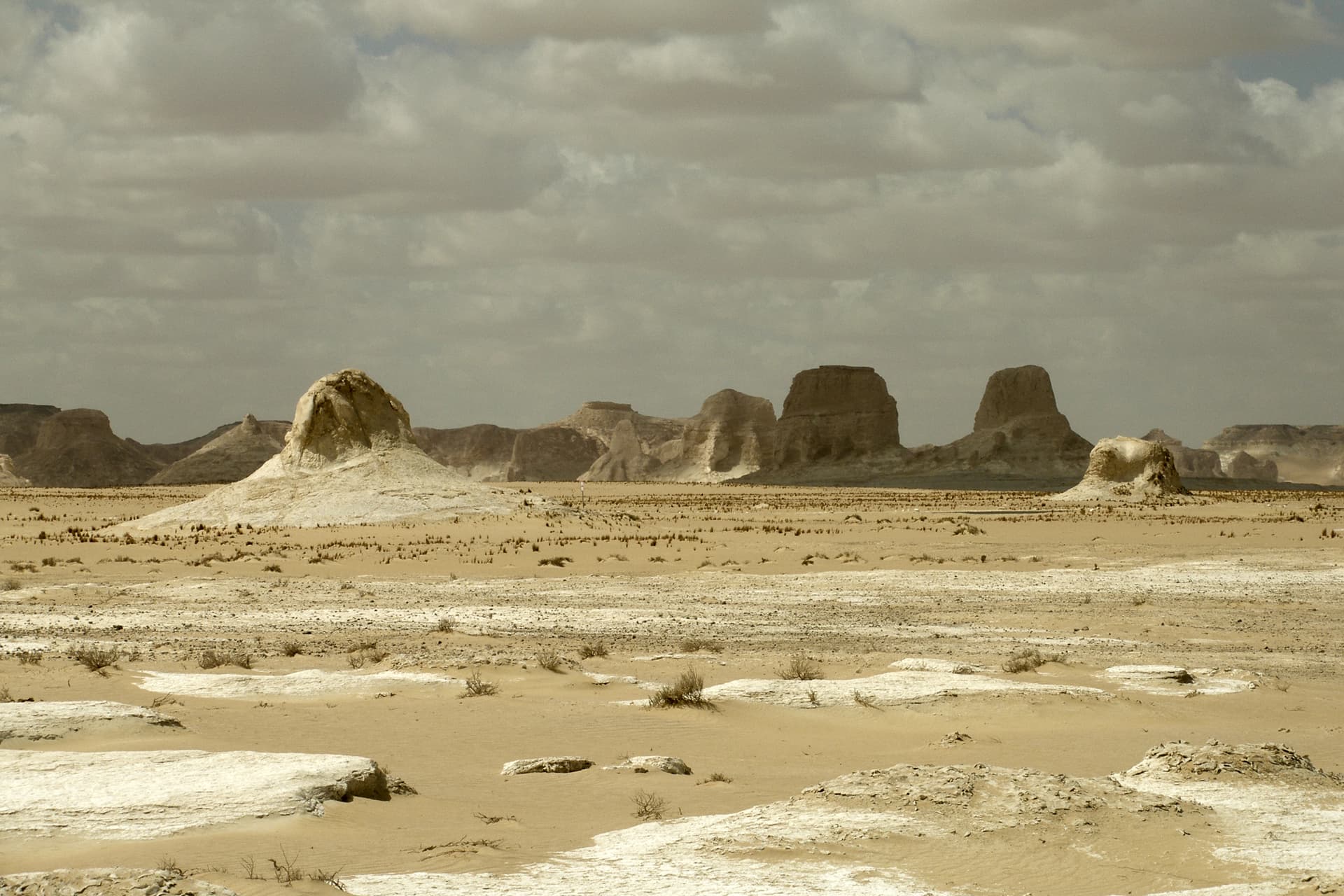
Nothing in Egypt quite prepares you for the White Desert. Not the pyramids, not the temples along the Nile, not the reefs of the Red Sea. This is a landscape from another planet — a vast pale plain strewn with chalk sculptures worn by millions of years of wind into forms that defy expectation: giant mushrooms, looming animals, collapsed archways, abstract shapes that shift in colour from blinding white at noon to soft gold at sunset and ghostly silver under a full moon. White Desert National Park, part of the Western Desert of Egypt and protected as a national park since 2002, is one of the most surreal natural environments on the African continent. Visiting now gives you access to one of Egypt's least-crowded major attractions, where the night sky is among the clearest you will find anywhere, and where a single night camped on the chalk plain can become one of the defining experiences of your travels. This guide covers how to reach the park, what to see, when to go and how to plan your overnight desert itinerary.
Why Visit White Desert National Park (Egypt)
White Desert National Park offers something that nowhere else in Egypt or Africa can match: an entirely otherworldly landscape produced not by human hands but by the slow artistry of wind erosion over geological time. The chalk formations — some as tall as a two-storey building — are made of calcium carbonate deposited when this region lay beneath an ancient sea, sculpted over tens of thousands of years into shapes that feel both random and deliberate. The park lies within a broader UNESCO-designated area, and its night skies are among the darkest and most star-rich in the Northern Hemisphere, making it one of the premier stargazing destinations in Africa. Compared to the Sahara dunes of Merzouga in Morocco, the White Desert offers a fundamentally different experience: not vast seas of sand but a textured moonscape of white and cream. It rewards those who venture beyond Egypt's well-worn temple and pyramid trail with an encounter that is genuinely hard to forget.
Top Attractions & Experiences
Mushroom Rock
Mushroom Rock is the most photographed feature in White Desert National Park. It rises like a giant stone toadstool on a wide plain. This formation is accessible by 4x4 tour and is perfect for sunrise or sunset photography. The walk around it is short, making it suitable for most travellers.
Crystal Mountain
Crystal Mountain is a ridge of sparkling quartz and translucent rock that lies at the park’s heart. Hiking up its slope reveals a glittering landscape with views across the white plains. The terrain is steep but rewarding, and the mountain is often included in longer desert itineraries.
Black Desert
The drive into White Desert usually begins in the Black Desert, a stretch of dark volcanic hills and ochre sands. This stark contrast prepares you for the white chalk landscape ahead. The Black Desert is less crowded and offers dramatic viewpoints over the surrounding Sahara.
Bahrainn Oasis
Bahrainn Oasis is a hidden green pool ringed by palms, appearing like an island in the sand. It is a calm stop after the bright, open desert and a great place to relax on the way to the main park. The oasis is seasonal, but even a dry riverbed in the area has its own quiet beauty.
Desert Camping
Camping under the stars is the flagship experience at White Desert. Most tours include an overnight camp with shared tents, evening dinners and the chance to see the Milky Way. The sky is exceptionally clear and the silence of the desert is a highlight for many travellers.
Best Time to Visit
The White Desert is a year-round destination in principle, but in practice only the cooler months offer a comfortable experience.
November to February is the prime window. Daytime temperatures range from 18°C to 25°C, cool enough for walking and photography, while nights can drop to 5°C or below — cold enough to make a sleeping bag essential but cold in a way that only makes the fire and the stars feel more vivid. December and January are the coldest months and also among the most popular, so book tours in advance.
March and October are comfortable shoulder months with slightly warmer afternoons. Fewer tourists make for quieter camps, and the early morning light on the formations is particularly fine in autumn.
Best overall: November to February
Shoulder season: March, October
Budget travel: September, April
Avoid: May to August — temperatures exceed 40°C, making camp uncomfortable
Summer visits are possible but rarely pleasant. The chalk reflects sunlight with fierce intensity, daytime exploration is limited to the early morning hours, and camp sleeping without air conditioning is genuinely uncomfortable when the temperature at midnight is still above 25°C.
Getting There
The main international gateway is Cairo International Airport (CAI), served by EgyptAir, Emirates, British Airways, Lufthansa, Qatar Airways and Turkish Airlines among others. From London, the flight takes around five hours; from Dubai, approximately three.
From Cairo, the primary route to the White Desert is an overland drive of approximately five to six hours through the Nile Delta and across the desert plateau to Bahariya Oasis, the main staging point for desert tours. The oasis town is 365 km from Cairo and is connected by a well-maintained desert road. Many tour operators include the Cairo-to-oasis leg as part of a packaged tour, with a driver and 4x4 provided throughout. Independent travellers can take the Western Desert bus from Cairo's Turgoman bus terminal, which serves Bahariya Oasis in around four to five hours.
Once at Bahariya, all access to White Desert National Park itself requires a 4x4 vehicle and a licensed desert guide. The park entrance is approximately 45 km south of the oasis, and the most remote camps lie another hour's drive into the desert. No public transport serves the park directly.
Visa & Entry Requirements
Egypt offers e-visa and visa-on-arrival for many nationalities. The tourist visa normally lasts 30 days and is extended if necessary within the country. Visit the Egyptian Ministry of Foreign Affairs website for current policies.
Many travellers from Europe, the Americas and the Middle East can obtain the visa on arrival, but an e-visa is recommended for certainty. Passports should be valid for at least six months beyond the travel date. Yellow Fever vaccination is required only if arriving from a risk country.
Getting Around
Getting around White Desert National Park requires a 4x4 vehicle and a licensed desert guide — there are no paved roads inside the park and no public transport of any kind. The terrain ranges from firm gravel and sand to soft drifts that require experience and the right tyres to navigate safely. All reputable operators use purpose-built expedition 4x4s, typically Land Cruisers or Mitsubishi Pajeros, equipped with water reserves, communication devices and recovery equipment.
Within the park, distances between major formations range from two to fifteen kilometres, making a vehicle essential for seeing more than one or two sites. Walking between formations is possible for shorter distances and is recommended around Mushroom Rock and Agabat Valley, where the detail in the chalk can only be appreciated on foot. For travel between Cairo and Bahariya Oasis, private minibuses or self-driving on the well-maintained desert highway are both practical options for those not part of an organised group.
Accommodation Guide
Accommodation options fall into two clear categories: those based in Bahariya Oasis town, and the desert camps in the park itself.
Budget (under $80 per night): Several small guesthouses and simple lodges in Bahariya Oasis offer clean rooms at $20–$50 per night. Camps at this level provide shared tents, sleeping bags and basic meals. The camp experience is the priority for most visitors at this tier, not the guesthouse comfort.
Mid-range ($80–$250 per night): A handful of mid-range desert camp operators provide private tents with proper camping mattresses, better sleeping bags, and higher-quality meals cooked over a campfire. Some include a naturalist guide and a more structured itinerary covering multiple formations. These tours typically cost $120–$180 per person for a two-day, one-night package including transport from Cairo.
Luxury ($250+ per night): A small number of premium operators offer fully outfitted private camps with elevated beds inside Bedouin-style tents, chef-prepared three-course dinners, and private vehicle access to the most scenic locations in the park at sunrise and sunset. These premium packages run $300–$500 per person per night.
All camp accommodation requires sleeping in the open desert. The sky overhead is the ceiling, and that is precisely the point.
Food & Culture
Meals on a White Desert tour are typically Egyptian and Bedouin-inspired, including stews, rice, flatbread and sometimes grilled meats. Drinking mint tea around the evening fire is a common part of the desert experience.
Respect local culture by being polite and modest in clothing, especially when visiting oasis villages or camps run by local families. Desert guides often come from the Western Desert communities, and tips are appreciated for good service.
The park is not a cultural hub like Cairo, but the sense of desert tradition is strong. Simple hospitality, shared meals and the quiet of the night create a memorable atmosphere.
Budget & Cost Guide
The White Desert is affordable by most standards, with the main cost being the guided 4x4 tour.
Budget traveller: ~$70–$100 per day
Mid-range traveller: ~$130–$200 per day
Luxury traveller: $280+ per day
Budget travellers joining a shared group tour from Cairo — transport, guide, camping and meals included — typically pay $100–$160 for a two-day, one-night package. This breaks down to roughly $70–$90 per day and represents outstanding value for the experience.
Mid-range travellers in semi-private tours or with a small group of two to four pay $160–$250 for the same two-day package. The additional cost buys a better vehicle, a more experienced guide and higher-quality camp meals.
Luxury travellers in private vehicles with premium camp setups pay $400–$600+ for a two-day tour. The Egyptian pound (EGP) is the local currency, but all tour operators in Bahariya readily accept USD and euros. Carry cash in both currencies for flexibility.
Travel Tips & Safety
Always travel with a licensed operator. The desert terrain is disorienting and 4x4 navigation requires local knowledge. Getting lost in the Western Desert without communication equipment is a genuine risk. A licensed guide provides safety, route planning and park permit management.
Layer clothing for temperature swings. The difference between a White Desert afternoon (25°C+) and a White Desert midnight (5°C–10°C) is dramatic. Pack a warm fleece or jacket even in autumn, and a quality sleeping bag rated to at least 5°C.
Protect yourself from the sun. The chalk plain reflects sunlight upward as well as receiving it from above, giving you a double dose. Use SPF 50+ sunscreen, wear a hat with a full brim and consider UV-protective clothing. Sun damage in the desert is faster than most visitors expect.
Travel insurance is non-negotiable. The nearest hospital with emergency care is in Cairo, roughly six hours from deep in the park. Ensure your policy covers medical evacuation from remote locations.
Photography notes: The best light for the formations is the 45 minutes after sunrise and the 45 minutes before sunset, when the chalk turns from white to gold, orange and pink. Bring more battery capacity than you think you need — cold nights drain batteries quickly, and there is no power in the desert to recharge.